Solving Skin That Looks Tired: Epidermal Renewal or Dermal Reinforcement?


“Tired-looking skin” is one of the most common concerns we see — and one of the most misunderstood. It’s often described as dull, flat, shadowed, or lifeless, even when hydration, sleep, and skincare are technically “in place.”
At La Dermalogique, tired-looking skin is not treated as a cosmetic flaw. It’s assessed as a signal-processing issue: either the epidermis is failing to renew efficiently, or the dermis is no longer providing adequate structural support. The solution depends on where the breakdown is occurring.
This is why the decision between epidermal renewal (Marine Spicules) and dermal reinforcement (Collagen Banking Microneedling) matters far more than product changes or stronger facials.
What “Tired Skin” Actually Means in Clinical Terms
Skin that looks tired is rarely just dehydrated. Clinically, it usually reflects one (or both) of the following:
• Slowed epidermal turnover leading to light-reflective dullness
• Reduced dermal density causing subtle collapse, shadowing, or flatness
When epidermal turnover slows, corneocyte buildup interferes with optical clarity and texture smoothness. When dermal support weakens, the skin loses internal tension, making even well-hydrated skin appear fatigued.
Determining which layer is responsible is essential. Treating the wrong layer leads to wasted sessions and short-lived results.
When Epidermal Renewal Is the Correct First Step
If tired skin presents primarily as dullness, congestion, uneven texture, or a “greyed” surface appearance, the issue is often functional rather than structural.
In these cases, Marine Spicules Skin Renewal is frequently the more appropriate intervention.
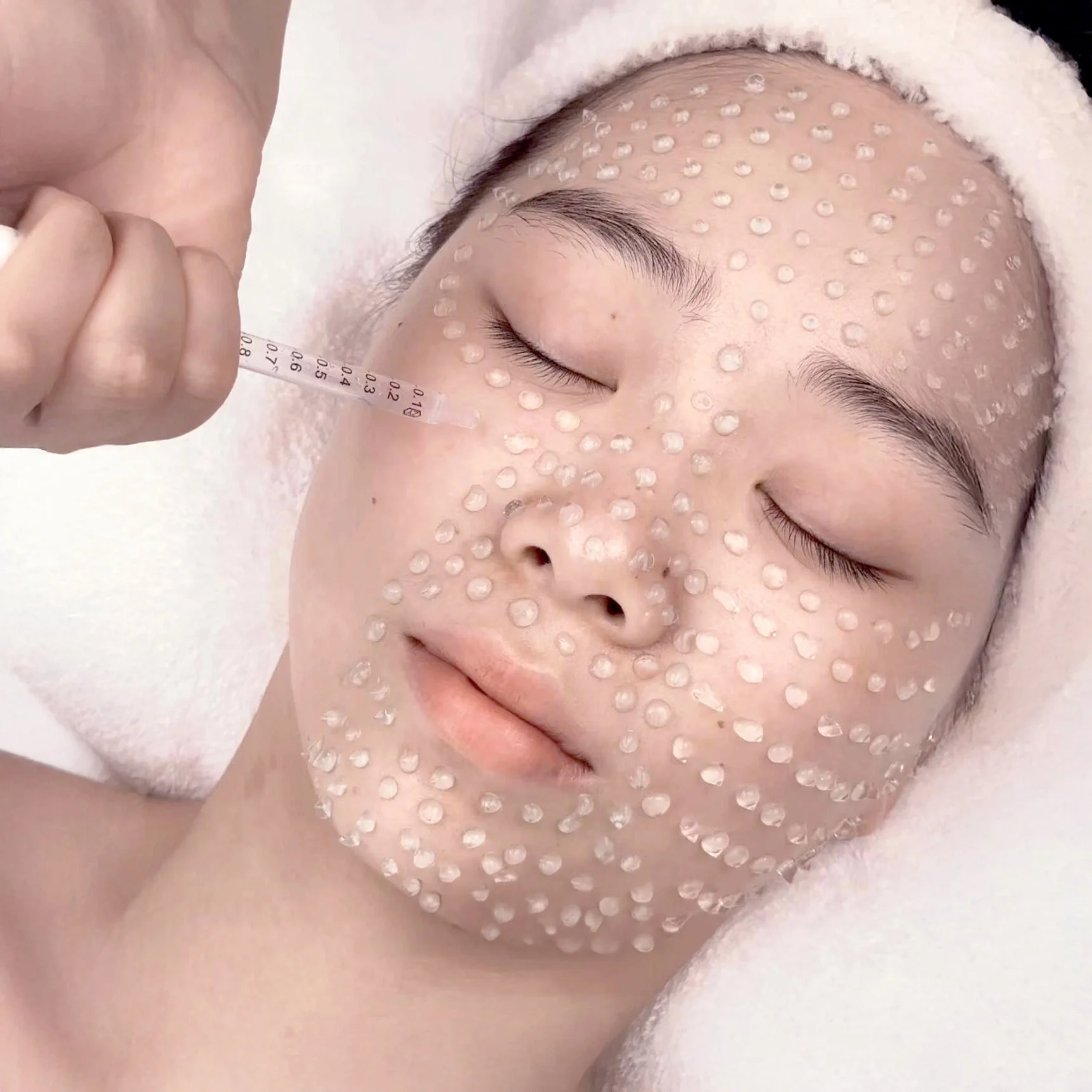
Marine spicules act as bioactive siliceous microstructures, delivering controlled epidermal micro-stimulation that promotes keratinocyte turnover modulation, dermal–epidermal junction signalling, and microcirculation support. The objective is to restore renewal rhythm and signal clarity, not to force volume or density changes prematurely.
This pathway is especially effective when skin looks tired despite appearing “healthy” on paper — meaning hydration is present, but renewal efficiency is not.
When Dermal Reinforcement Is the Missing Piece
If tiredness presents as flatness, subtle sagging, shadowing under the eyes or mid-face, or a loss of firmness even when texture is smooth, the problem is more likely dermal.
Here, epidermal renewal alone will not hold results.
Collagen Banking Microneedling targets this deeper issue by stimulating fibroblast-mediated neocollagenesis through controlled micro-injury. This reinforces the extracellular matrix, improves dermal density, and restores internal skin tension over time.
In these cases, the skin does not look tired because it isn’t renewing — it looks tired because it lacks structural support.
Why Many “Glow” Treatments Fail Long-Term
Generic glow treatments often combine exfoliation, hydration, and massage without distinguishing between epidermal and dermal needs. The result may look good temporarily, but the underlying cause of tiredness remains untreated.
At La Dermalogique, treatment selection is guided by skin behaviour assessment, recovery patterns, and tissue readiness. This allows us to decide whether tired skin needs reconditioning, reinforcement, or a carefully sequenced combination.
We regularly explain this logic through Beauty Insights so clients understand why a certain path is chosen — not just what is being done.
The La Dermalogique Perspective on Sustainable Brightness
Sustainable brightness is not created by repeated stimulation. It’s created when skin function and structure are aligned.
Our treatment philosophy, clinical judgement framework, and sequencing logic are outlined further on the About La Dermalogique page, where we detail how predictability is prioritised over promises.
The Brow & Beauty Boutique Section
For clients maintaining results between in-clinic sessions, The Brow & Beauty Boutique’s Skin Management & Anti-Aging services provide barrier-supportive care that complements both renewal-led and structure-led strategies.
For home care, their curated professional skin and beauty products can support luminosity and recovery when used intentionally rather than layered excessively.
Summary Clinical Guidance
Tired skin is not a single problem, so it cannot have a single solution.
If renewal is slow, reset the epidermis.
If structure is weak, reinforce the dermis.
When both are addressed in the correct order, tired-looking skin regains clarity, resilience, and vitality — without over-treatment.