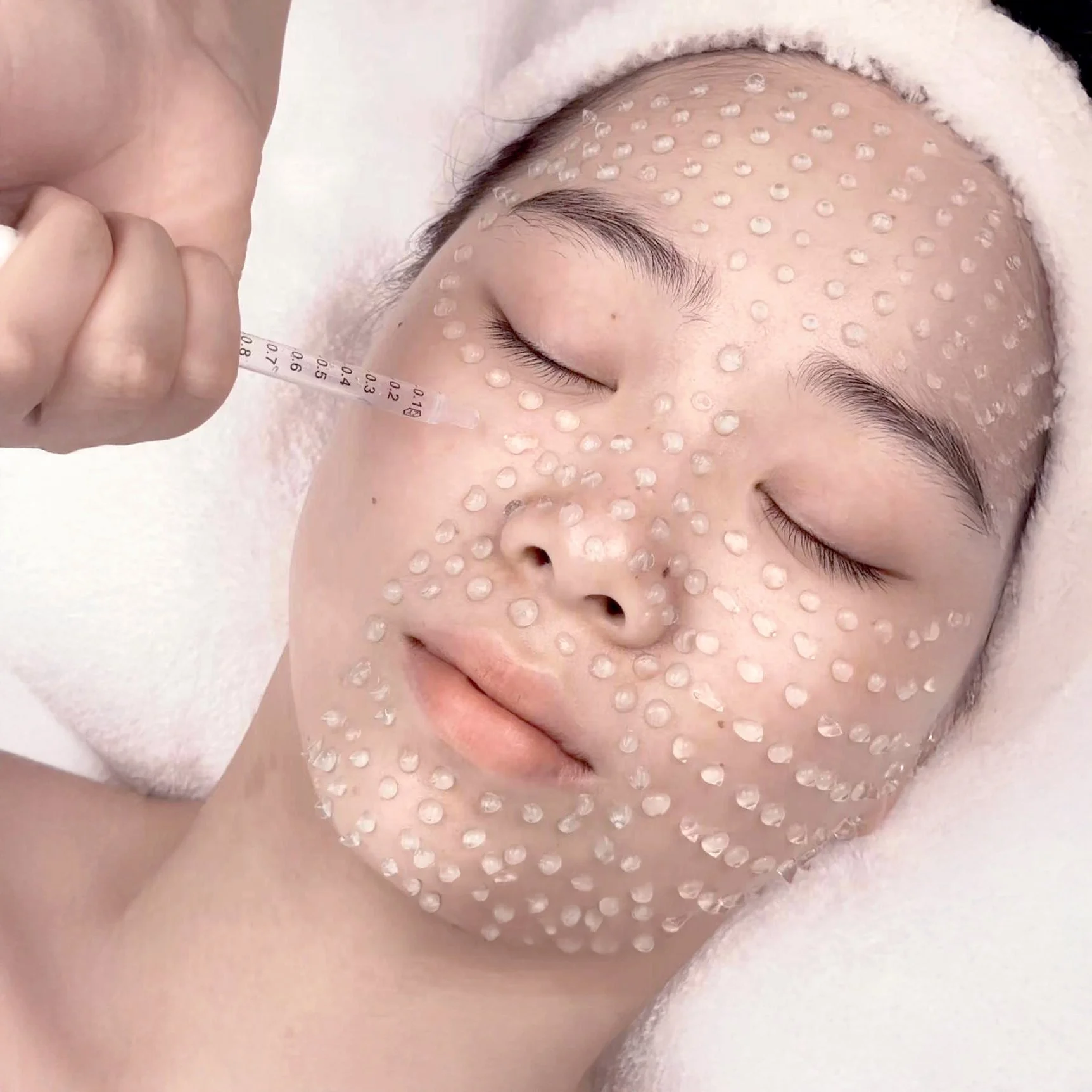
Skin behaviour and facial structure are often discussed as separate concerns, but in reality they influence each other continuously over time. Changes at the surface layer can alter how facial structure is perceived, while shifts in structural support and fluid dynamics can directly affect skin clarity, tone, and resilience. When this interaction is ignored, results may look acceptable short term but degrade unevenly as time passes.
At La Dermalogique, long-term planning is built around understanding how skin function and facial structure evolve together, not independently.
Skin behaviour shapes how structure is seen
As skin ages or becomes repeatedly stressed, barrier homeostasis weakens, epidermal renewal slows, and subclinical inflammation becomes more common. These changes affect light reflection, texture uniformity, and visual clarity. Even when facial structure remains relatively intact, unstable skin can make contours appear softer, heavier, or less defined than they actually are.
This is why early and ongoing skin conditioning matters. Stabilising surface behaviour preserves how facial framework is perceived, not just how the skin feels.
Facial structure influences skin performance
Facial structure is not static. Over time, changes in soft-tissue density, muscle tone, and lymphatic efficiency alter how fluid moves through the face. When fluid stagnates or tissue responsiveness declines, the skin above it may appear dull, swollen, or uneven despite adequate surface care. Structural congestion increases mechanical stress on the skin, which can further impair barrier function and recovery speed.
This bidirectional relationship explains why treating only one layer often leads to diminishing returns.
Why interaction becomes more important with time
In earlier stages, surface skin treatments may compensate for mild structural changes, and contouring may temporarily offset surface fatigue. Over time, however, misalignment between skin behaviour and facial structure becomes more visible. The face may cycle between clarity and heaviness, or results may require increasing intensity to maintain the same effect.
A combined, sequenced approach slows this cycle by allowing each layer to support the other.
Skin Behaviour vs Facial Structure: How Interaction Changes Over Time
How La Dermalogique manages this interaction
Rather than treating skin and structure as separate phases, La Dermalogique uses process-driven sequencing. Skin conditioning through the Signature Skin Treatment is often used to stabilise surface behaviour first. Once predictability is established, Signature Glow Up Contouring refines structure without destabilising the skin above it.
This philosophy is outlined further on the About Us page, with deeper clinical explanations shared through Beauty Insights.
Supporting balance beyond the clinic
As skin and structure age together, maintenance must respect both layers. For clients continuing anti-aging or long-term conditioning care, The Brow & Beauty Boutique provides aligned skin management and anti-aging pathways that reinforce barrier stability alongside facial balance.
Planning for interaction, not isolation
Skin behaviour and facial structure are in constant dialogue. Addressing one without considering the other limits longevity. When both are assessed together and supported in sequence, results remain calmer, clearer, and more consistent as time progresses.
To begin with a behaviour-led assessment focused on long-term balance, you may start at La Dermalogique.